Sem categoria Simple Care Tips That Make Your Car Look Newer Keeping a car looking new does not always require major investments or complex procedures. In fact, small and consistent care habits can significantly improve the appearance of any vehicle. Over time, daily use exposes the car to dust, sunlight, moisture, and contaminants. As a result, surfaces lose their original look, and the vehicle starts to appear older than it actually is. However, with the right approach, you can reverse much of that visual wear. More importantly, you can maintain a clean, well-preserved appearance without excessive costs. Therefore, understanding simple care practices that make your car look newer is essential for anyone who values both aesthetics and long-term preservation. In this article, you will discover practical, effective, and easy-to-apply strategies that deliver visible results. Why cars lose their “new” appearance Before applying solutions, it is important to understand the causes. A car does not look older only because of time. Instead, several factors contribute to visual aging: Accumulation of dirt and contaminants Exposure to sunlight and UV rays Improper cleaning techniques Lack of protection on surfaces Neglected interior maintenance Consequently, even relatively new vehicles can look worn if they do not receive proper care. On the other hand, older cars often look well-maintained when owners follow consistent routines. Start with proper washing techniques First of all, washing your car correctly makes... 28 de May de 2026 5 minutes of reading
Sem categoria How to Prevent Windshield Stains That Affect Night Driving Driving at night already requires more attention. However, when the windshield has stains, glare increases and visibility drops significantly. Many drivers notice halos around lights, streaks that seem impossible to remove, or a hazy layer that becomes much more visible after sunset. Although this issue appears suddenly, it usually develops over time. Dirt, residues, and improper cleaning techniques gradually affect the glass surface. As a result, what looks like a minor problem during the day turns into a serious visibility concern at night. Therefore, understanding how to prevent windshield stains that affect night driving is essential for both safety and long-term glass maintenance. In this article, you will learn the causes, the most common mistakes, and the best practices to keep your windshield clear at all times. Why windshield stains become worse at night First, it is important to understand why this problem is more noticeable after dark. During the day, natural light spreads evenly across the glass. However, at night, artificial light sources such as headlights and street lamps hit the windshield at specific angles. As a result: Light reflects unevenly Streaks become more visible Residues create glare and halos In addition, even small amounts of contamination can distort light. Consequently, visibility decreases, and eye strain increases. For this reason, what seems like... 21 de May de 2026 5 minutes of reading
Sem categoria How to Keep Your Car Looking Good Even When Parked on the Street Parking on the street is a reality for many drivers. Whether due to limited garage space or daily convenience, cars often remain exposed to environmental conditions for long periods. As a result, maintaining a clean and well-preserved appearance becomes more challenging. However, even without covered parking, it is entirely possible to keep your car looking good. The key lies in adopting the right habits, using proper techniques, and understanding how external factors affect the vehicle. Therefore, learning how to maintain your car’s appearance while parking on the street can save time, reduce long-term damage, and preserve value. In this article, you will discover practical strategies that help protect your car and keep it looking newer, even under constant exposure. Why street parking affects your car’s appearance First, it is important to understand the challenges. When a car stays parked outdoors, it faces continuous exposure to: Sunlight and UV radiation Rain and water contaminants Dust and air pollution Bird droppings and tree sap Temperature fluctuations Over time, these elements affect both the exterior and interior.... 14 de May de 2026 5 minutes of reading
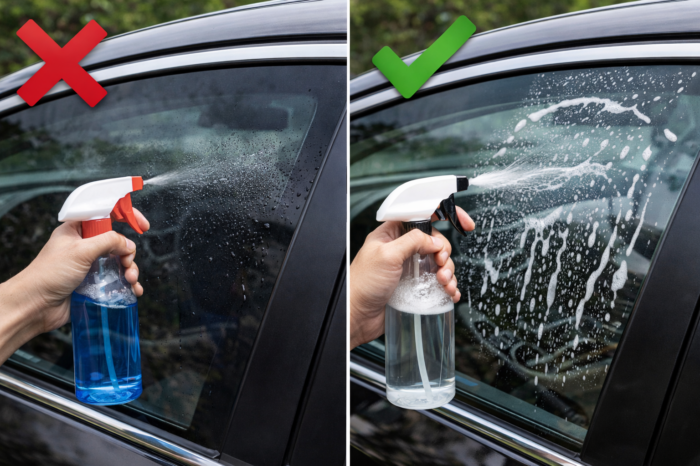
Sem categoria Common Mistakes When Caring for Automotive Glass Automotive glass plays a crucial role in both safety and aesthetics. Clean, clear windows improve visibility, enhance driving comfort, and contribute to the overall appearance of the vehicle. However, many car owners unknowingly make mistakes when cleaning and maintaining their glass surfaces. As a result, instead of improving clarity, these practices often lead to streaks, stains, scratches, and even long-term damage. Therefore, understanding the most common mistakes when caring for automotive glass is essential. Not only does proper care improve visibility, but it also extends the lifespan of the glass and prevents costly corrections in the future. In this article, you will learn the most frequent errors, why they happen, and how to avoid them for better and more consistent results. Why proper glass care matters Before diving into the mistakes, it is important to recognize why automotive glass requires proper attention. First, glass surfaces constantly face exposure to: Dust and pollution Rain and mineral deposits Oils and residues from hands Road contaminants and debris In addition, environmental conditions such as heat and humidity can worsen contamination. Consequently, improper cleaning techniques can make the situation worse rather than better. For this reason, adopting the correct approach ensures better performance, safer driving conditions, and a more refined finish. Mistake 1: Using household cleaners One of the most common mistakes involves using household glass cleaners. Although these products seem convenient, they often contain ingredients such as ammonia. As a result: ... 7 de May de 2026 5 minutes of reading
Glass Window Film (Tint) vs. Glass Cleaners: What You Can and Cannot Use The application of automotive window film, commonly known as tint, has become extremely common in vehicles. In addition to providing greater thermal comfort, reducing brightness, and increasing privacy, the film also helps protect the car's interior from sun exposure. However, after the installation of window film, many doubts usually arise about the correct way to clean the glass. Frequently, products that would normally be used on regular glass are applied without considering the presence of the film. As a result, damage to the tint may occur over time. For this reason, it is important to understand which glass products can be used safely and which should be avoided when a vehicle has window film installed. Furthermore, when the correct care is followed, the durability of the film tends to be significantly longer. What automotive window film (tint) is Before understanding cleaning care, it is important to understand how automotive window film works. The film is made of thin layers of polyester that are applied to the inner side of the glass. These layers may contain specific treatments that help block part of the solar radiation, reduce heat, and control the passage of light. Depending on the technology used, different benefits can be provided, such as: reduction of heat inside the vehicle reduction of glare caused by sunlight protection against UV rays increased privacy for occupants However, despite offering several benefits, window film is a material that requires special care during cleaning. This happens because the film layer can be sensitive to certain chemicals and aggressive cleaning methods. Why some glass cleaners can damage window tint In many cases, glass cleaning products contain chemical components that help dissolve grease, remove marks, and provide shine. ... 25 de April de 2026 5 minutes of reading
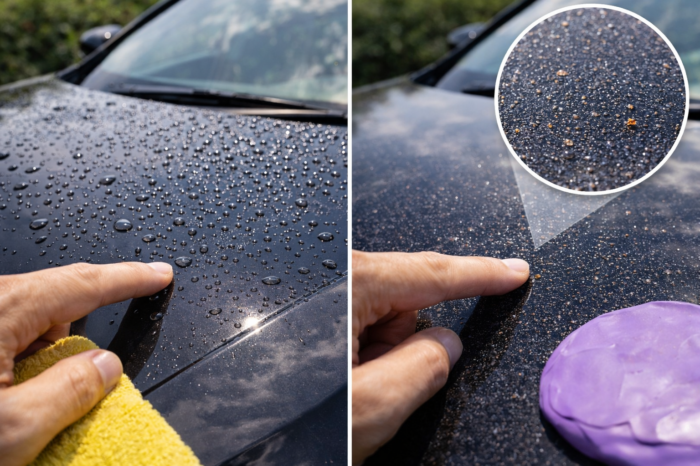
Painting Why the car feels “rough” even after washing (and how to fix it) Many people experience the same situation: the car is washed and appears clean, but when the hand is passed over the paint, the surface feels rough. This uneven texture creates the impression that something is still wrong with the surface. In fact, in most cases there is a technical reason for this to happen. Although washing removes a large portion of visible dirt, not all contaminants present on the paint are always eliminated. This happens because many particles adhere more deeply to the clear coat. As a result, even after a careful wash, the surface may remain contaminated. For this reason, understanding why the car feels rough after washing is essential for maintaining the appearance, shine, and durability of the paint. In addition, when the correct cause is identified, the issue can usually be resolved with relatively simple processes. What causes the rough feeling on the paint First of all, it is important to understand that roughness is usually not caused by a lack of cleaning. In most situations, the issue is related to paint contamination. During daily vehicle use, different types of particles are deposited on the surface. These particles can become embedded in the clear coat and cannot be removed with automotive shampoo alone. Among the most common contaminants are: Metallic particles from brakes and pollution Industrial fallout Mineral dust Tree sap Acid rain residues Asphalt and tar particles These contaminants are often referred to as ferrous contamination or bonded contamination. Because they become embedded in the clear coat, they are not easily removed during conventional washing. Consequently, when the hand is passed over the paint, the surface may feel rough even though it looks clean. Why traditional washing does not remove this type of dirt ... 18 de April de 2026 5 minutes of reading
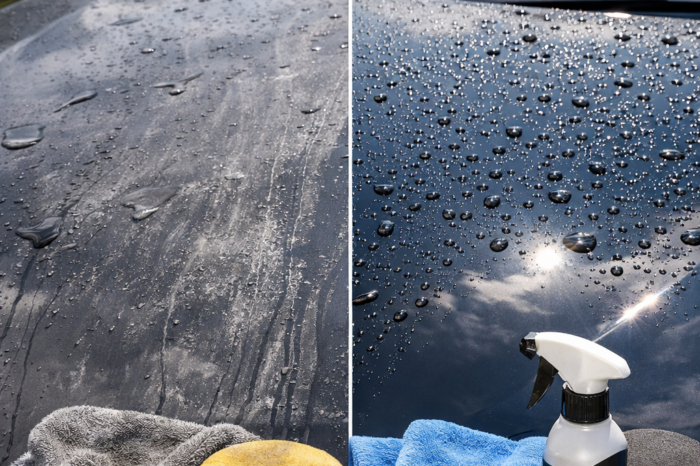
Protection How to Tell When Paint Protection Has Worn Off and It’s Time to Reapply Paint protection is one of the most important steps in keeping a car shiny, looking new, and more resistant to external elements. Products such as waxes, sealants, and synthetic coatings are applied specifically to create a protective layer over the paint's clear coat. However, a very common question among vehicle owners is how to know when this protection stops working and needs to be reapplied. Many people believe the protection remains active for a long time without maintenance, while others end up reapplying products more frequently than necessary. In practice, the durability of paint protection can vary significantly. This happens because factors such as climate, washing methods, sun exposure, pollution, and even where the car is parked directly influence how long the protection lasts. For this reason, understanding how to identify the signs that paint protection has worn off is essential to keep the vehicle properly protected. Moreover, when reapplication is performed at the right time, the paint finish tends to remain shiny and protected for much longer. What automotive paint protection is Before understanding when protection wears off, it is important to understand what it actually does. Paint protection consists of applying a product that creates a protective layer over the clear coat. This layer acts as a barrier between the paint and external elements. As a result, the direct impact of contaminants is reduced. Among the main elements that can affect paint are: solar radiation acid rain urban pollution bird droppings tree sap dust and abrasive particles In addition, protection also helps enhance the paint's shine and makes future washes easier. However, over time, this protective layer naturally wears down.... 11 de April de 2026 5 minutes of reading
Details Complete Interior Car Cleaning: Checklist by Area (Dashboard, Seats, Headliner, and Carpets) Keeping a car's interior clean goes far beyond aesthetics. A sanitized interior environment contributes to passenger comfort, preserves the vehicle's materials, and helps maintain the car's value over time. However, many people perform only superficial cleaning, leaving several important areas without the necessary attention. For this reason, a complete interior cleaning should be carried out in an organized and strategic way. When an area-by-area checklist is followed, the entire process becomes more efficient and helps ensure that no part of the vehicle's interior is overlooked. In addition, when the correct products and methods are used, the car's materials are preserved, preventing premature wear, stains, or drying. Therefore, understanding how to structure a complete interior cleaning is essential to keep the vehicle consistently pleasant and well maintained. Below is a complete checklist by area to help perform the cleaning in a professional manner. Preparation before interior cleaning Before starting the cleaning process, some preparatory steps should be completed. Although they may seem simple, these steps help optimize the final result. First, all personal items should be removed from the vehicle's interior. Bottles, papers, glove compartment items, and loose accessories should be taken out so that cleaning can be performed more accurately. Next, an initial vacuuming of the interior should be performed. This allows loose dust, sand, and small particles to be removed before wet cleaning begins. ... 4 de April de 2026 5 minutes of reading
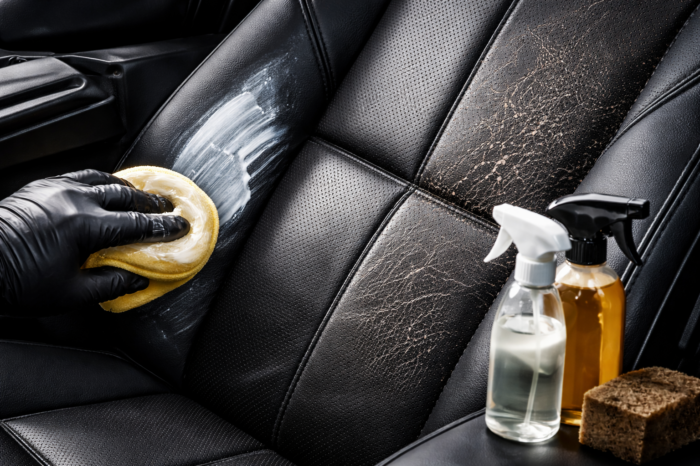
Leather What you apply to leather can dry it out completely: how to prevent damage and keep leather hydrated If you’ve ever looked at your car seat and thought, “It looks lifeless,” know that this almost never happens out of nowhere. In practice, dried-out leather is the result of the wrong routine, the wrong products, and—most importantly—a very common habit: applying anything and assuming that “if it’s good for cleaning, it’s good for preserving.” But it isn’t. What you apply to leather can dry it out completely—and when dryness shows up, it often comes with loss of softness, artificial shine, color changes, and even cracking. And here’s an important point: automotive leather isn’t a “raw” surface. It usually has a finish (a protective layer) and requires specific care. That means daily stressors like heat, friction, and sweat already cause natural wear. When you add unsuitable products, the process speeds up. So, if your goal is to keep your interior looking premium for much longer, it’s worth learning the basics the right way. In this article, you’ll understand why some products ruin leather, how to spot early signs of dryness, what to do to prevent it, and a safe, step-by-step cleaning and conditioning routine—without guesswork. Why does leather dry out? Dryness happens when leather loses flexibility and becomes “stiff,” with a rough feel and a dull appearance. This can occur for three main reasons: Heat and sun exposure The inside of a car can turn into a greenhouse. Over time, high temperatures speed up degradation and shorten the lifespan of the leather’s protective finish. Built-up dirt and friction ... 28 de March de 2026 6 minutes of reading
Tires If the tire “shines” and the next day it’s gone, something’s wrong: how to apply tire dressing the right way You wash the car, apply tire dressing, and the tire looks amazing—deep black, vibrant, with that showroom shine. But the next day, it feels like it evaporated. Or worse: the tire gets blotchy, runs, smears onto the wheel, and attracts dust like a magnet. If you’ve been through this, if the tire “shines” and the next day it’s gone, something’s wrong. And the problem is almost never “the tire won’t hold product.” Most of the time, the issue is rubber preparation, product choice, and—above all—the way it’s applied. The truth is simple: tires are porous rubber, exposed to sun, heat, water, friction, and chemicals. So when you put any dressing over a dirty or contaminated tire, you’re basically applying “makeup” to a surface that isn’t ready for protection. The result is short-lived shine, uneven appearance, and low durability. In this article, you’ll understand why the shine disappears so fast, what truly makes tire dressing last, which mistakes are sabotaging your results, and a practical step-by-step to achieve a beautiful, consistent finish—whether you prefer glossy shine or a more satin look. Why does the shine disappear overnight? When the shine fades quickly, one (or more) of these situations is usually happening: 1) The tire was still dirty (even if it “looked clean”) Many people wash the tire only with car shampoo and think the job is done. However, tires... 21 de March de 2026 8 minutes of reading