Publications by Welderson Vonixx

Washing

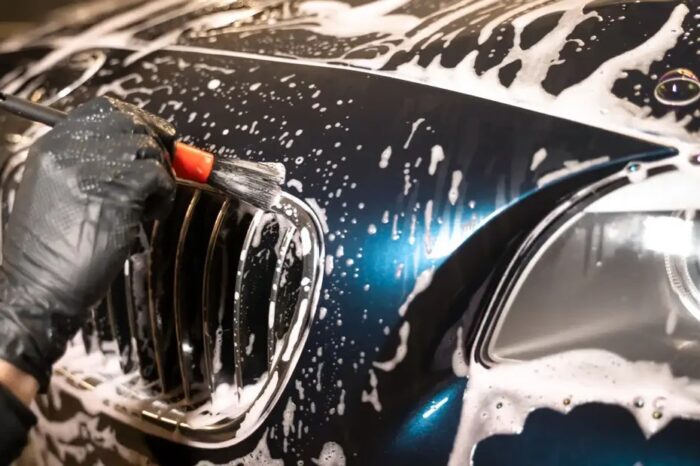
Drying the wrong way creates scratches and water spots: how to dry your car properly without marking the paint 

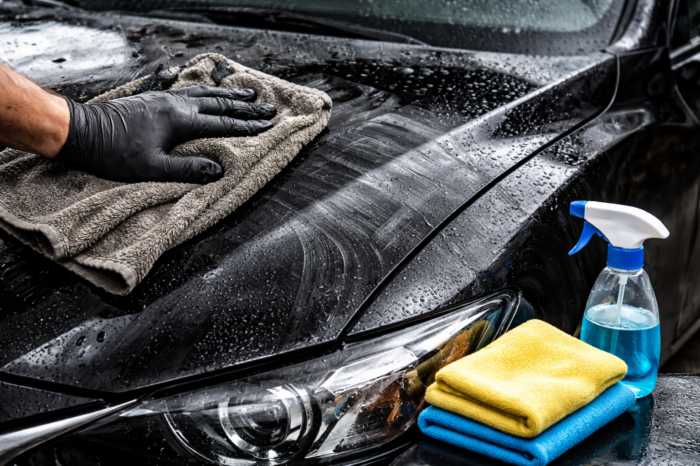
Many people think the danger to paint is only during washing: the shampoo, the sponge, the strong jet of water. However, there’s one step that, in practice, scratches and stains more than the wash itself. And it’s simple, quick, and often done on “autopilot”: drying. Yes—drying the wrong way creates scratches and water spots. And when that happens, the paint loses gloss, develops micro-scratches (those famous swirl marks), and picks up water spots that seem impossible to remove.  Drying is the moment you touch the paint after it’s clean. So any technique mistake, any contaminated towel, or any rush becomes friction. And friction on automotive clear coat becomes marks. In addition, when water evaporates on its own, minerals remain behind. The result is spotting—especially on dark cars and in areas with “harder” water.  In this article, you’ll understand why drying is so critical, which common mistakes ruin paint, how to choose the right method and materials, and—most importantly—a safe step-by-step to dry your car and keep it looking like new.  Why is drying so risky for paint?  Automotive paint has a clear coat layer that protects and adds shine. However, that clear coat is more sensitive than it seems. When you dry:  the surface may still have micro-particles (even after rinsing)  water acts as a “medium” that carries residue  any wrong towel or touch creates micro-abrasion  That’s why drying the wrong way creates scratches and water spots through two paths at the same time: friction (micro-scratches) and evaporation (mineral spots).  Also, when you drag a towel with pressure, you’re basically “polishing in reverse”—creating fine scratch trails that, under the sun, show up like a spider web.  Water spots: what they are and why they appear  The most common drying stains are water spots....

14 de March de 2026 7 minutes of reading
Glass

Clean glass isn’t just about looks. It’s safety. Here’s why 

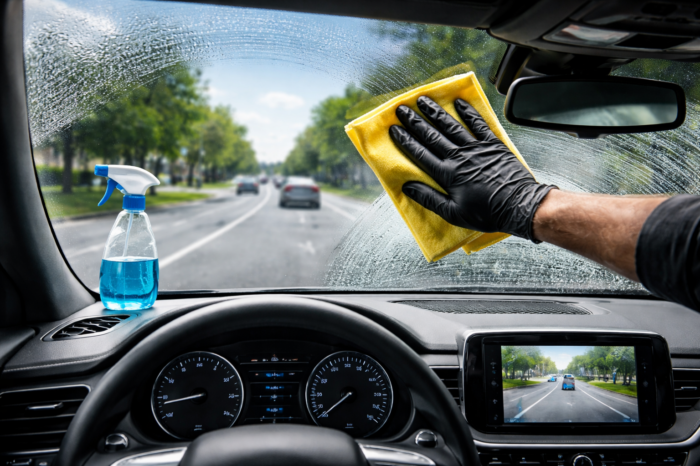
Many drivers clean their car windows only when they notice visible dirt. However, clean glass isn’t just about looks. It’s safety.  That statement is not an exaggeration. On the contrary, it involves visibility, reaction time, and accident prevention.  In this article, you’ll understand why keeping automotive glass clean directly impacts safety, what risks invisible grime creates, and how to build an efficient maintenance routine.  Clean glass isn’t just about looks. It’s safety in any driving condition  Vision is the primary sense used while driving. Defensive driving studies show that most decisions behind the wheel depend on visual perception.  Therefore, when the glass has:  Stains  Micro-scratches  An oily film  Water spots  Interior residue  Visibility is immediately reduced.  Even if the driver doesn’t consciously notice it, eye strain increases. Consequently, reaction time may decrease.  So, clean glass isn’t just about looks. It’s safety because it directly affects how well you read the road environment.  The impact of invisible grime  Often, glass looks clean at first glance. However, under direct light or at night, reflections and halos appear.  This happens because microscopic residues distort the way light passes through the glass.  In addition, at night, oncoming headlights reflect more intensely when the windshield is contaminated. ...

7 de March de 2026 5 minutes of reading
Plastics

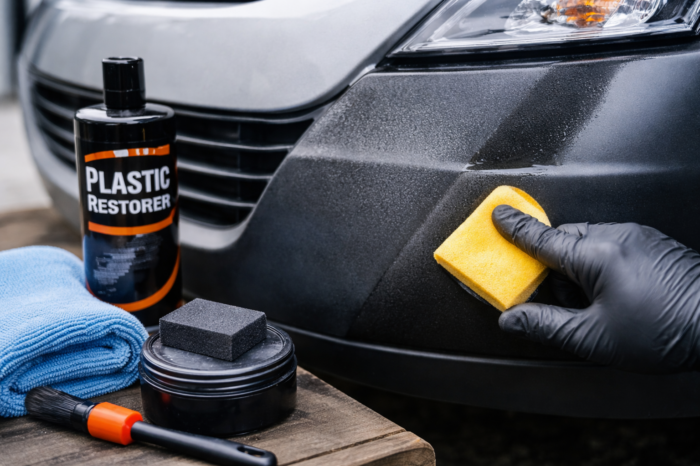
Why is plastic restoration so important? 

Over time, automotive plastics—both interior and exterior—undergo natural wear. Constant exposure to sunlight, rain, pollution, and even the improper use of products causes these surfaces to lose their original color, become faded, dry, and aged in appearance. Therefore, plastic restoration is no longer just an aesthetic concern; it has become an essential step in vehicle preservation.  In addition, when plastics do not receive proper treatment, their lifespan is reduced. Small cracks may appear, texture can be compromised, and in more extreme cases, complete material degradation can occur. Thus, investing in the right products and techniques is crucial to maintaining the car’s visual and functional standards.  What does restoring automotive plastics mean?  Restoring automotive plastics means bringing back the surface’s original appearance by restoring color, uniformity, and protection. Unlike simple cleaning, this process involves applying specific products that nourish the material, create a protective layer, and help slow down premature aging.  In this context, it is important to highlight that restoration can be performed on both interior plastics—such as dashboards, consoles, and door panels—and exterior plastics, such as bumpers, mirrors, and trim. However, each type of surface requires a different solution.  Main causes of plastic wear  Before choosing which option to use, it is essential to understand why plastics degrade. Among the most common factors are:  Prolonged exposure to UV rays  Use of unsuitable products, such as aggressive detergents ...

28 de February de 2026 7 minutes of reading
Washing

What is the ideal frequency to wash your vehicle? 

Why is vehicle wash frequency so important?  Washing your vehicle is one of the most basic aspects of automotive maintenance. However, a very common question among drivers concerns the ideal frequency for washing a car. Can washing too often cause premature wear? Does washing too little damage the paint? The answer lies in balance and, above all, in the vehicle’s usage conditions.  Over time, cars accumulate dust, pollution, acid rain residue, bird droppings, tree sap, and other contaminants that adhere to the paint. When these residues are not removed properly and in a timely manner, the surface can be damaged. Therefore, understanding the ideal washing frequency is essential to preserve aesthetics, protection, and vehicle value.  What happens when a car goes too long without washing?  When washing is postponed for too long, dirt does not remain only on the surface. Gradually, it bonds to the paint, creating a contaminated layer that makes future cleaning more difficult. In addition, some residues have aggressive chemical action.  For example, bird droppings and tree sap contain acidic substances that, when exposed to sunlight, can stain the clear coat. Likewise, urban pollution and acid rain accelerate paint deterioration. Thus, the longer the interval between washes, the greater the risk of permanent damage.  Is there such a thing as washing a vehicle too often?  On the other hand, washing a car excessively—especially when done improperly—can also be harmful. When incorrect techniques are used, such as abrasive cloths, unsuitable products, or insufficient lubrication, micro-scratches can be created in the paint.  Therefore, the issue is not exactly the frequency, but the quality of the wash. When the correct process is followed, using appropriate products and proper accessories, frequent washing does not cause damage and actually contributes to vehicle preservation. ...

21 de February de 2026 7 minutes of reading
Details

How to Prevent Scratches and Stains on Your Car’s Glass 

Why does automotive glass require specific care?  Car glass is one of the most important elements for both safety and aesthetics. In addition to ensuring proper visibility while driving, it also contributes to the vehicle’s overall visual finish. However, scratches and stains are recurring issues and often result from simple mistakes in cleaning and maintenance.  Over time, glass is exposed to dust, acid rain residues, pollution, tree sap, bird droppings, and even metallic particles. When these contaminants are not properly removed, the surface can develop stains, a dull appearance, and micro-scratches. Therefore, specific care must be adopted to preserve the glass’s transparency and integrity.  Main causes of scratches on car glass  Before learning how to prevent scratches, it is essential to understand how they occur. In many cases, the problem is not vehicle use itself, but rather the way cleaning is performed.  The most common causes include:  Using unsuitable cloths, such as rough or dirty fabrics  Sponges contaminated with sand or dust  Dry cleaning without proper lubrication  Excessively aggressive circular motions  Worn windshield wiper blades  As a result, small scratches gradually accumulate and compromise visibility, especially at night or under intense light.  What causes stains on automotive glass? ...

14 de February de 2026 7 minutes of reading
Protection

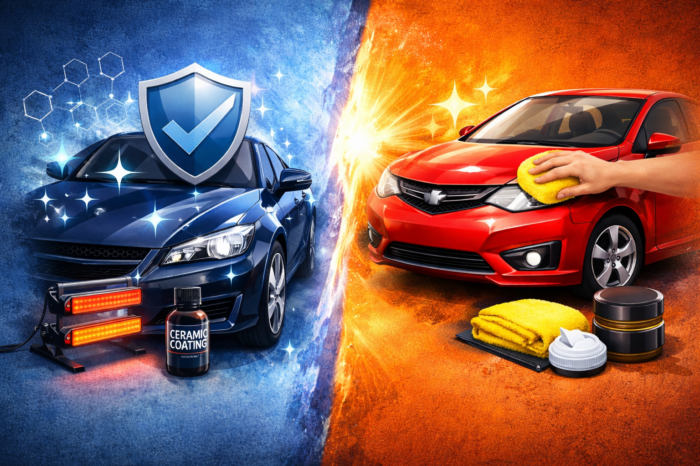
Ceramic Coating vs. Waxing: Which Is Better? 

The pursuit of protection, shine, and paint preservation is one of the biggest concerns for anyone who takes care of their car. As a result, two solutions stand out in the world of automotive detailing: ceramic coating and waxing. Although both share the same goal—protecting and enhancing the paint—they work in very different ways. So, after all, ceramic coating vs. waxing: which is better? The answer depends on your profile, how you use the vehicle, and the level of protection you want.  In this comprehensive article, you’ll understand the differences, advantages, disadvantages, and when to choose each of these options.  What is automotive ceramic coating?  Automotive ceramic coating, also known as ceramic coating, is an advanced paint protection process. It uses silica-based (SiO₂) products that, once applied, create a rigid and highly resistant layer over the clear coat.  This layer forms a kind of invisible “shield” that chemically bonds to the paint, offering long-lasting protection against external agents. For this reason, ceramic coating is widely used by professionals and specialized detailers.  In addition, ceramic coating significantly reduces dirt adhesion, makes cleaning easier, and delivers intense, long-lasting gloss. We recommend V-Paint Vonixx for paint coating because, in addition to shine, it provides extended protection for up to 3 years.  What is automotive waxing?  Automotive waxing is a more traditional and accessible technique. It uses natural, synthetic, or hybrid waxes that create a superficial protective layer over the paint. Products such as Blend Paste Wax and Native Spray Wax, both from Vonixx,...

7 de February de 2026 6 minutes of reading
Details

Start the Year with Your Car Up to Date: A Complete Automotive Detailing Checklist 

Starting a new year with a well-maintained car goes far beyond aesthetics. Automotive detailing is a set of practices that preserves paintwork, protects the interior, increases material durability, and directly contributes to the vehicle’s value. Therefore, adopting a complete automotive detailing checklist at the beginning of the year is a smart, cost-effective, and strategic decision.  Additionally, the start of the year is usually the ideal time to correct wear accumulated over previous months, whether from exposure to sun, rain, dust, pollution, or intense daily use. In this way, establishing a care routine helps prevent bigger problems in the future and keeps the car looking new at all times.  Below, you’ll find a complete checklist, organized by stages, to keep your car up to date and protected from the very first months of the year.  1. Complete and Safe Exterior Wash  Before any detailing step, proper washing is essential. However, it must be done with suitable products and safe techniques to avoid scratching the paint.  First, perform a pre-wash with V-Mol Vonixx to remove loose dirt. Then, use a neutral automotive shampoo such as V-Floc and paint-safe wash mitts. Furthermore, the two-bucket wash method significantly reduces the risk of micro-scratches.  Another important point is drying. It should be done with high-absorption microfiber towels such as the Vonixx Maxx Drying Towel, avoiding common cloths that can mark the clear coat.  2. Paint Decontamination  Even after a thorough wash, paintwork may still contain invisible contaminants such as industrial fallout, metallic particles, and tree sap....

24 de January de 2026 6 minutes of reading
Details

Ideal Gifts for Car and Motorcycle Lovers: Ideas That Combine Passion, Care, and Style 

Finding ideal gifts for car and motorcycle lovers may seem challenging at first. However, for those who live the automotive passion, any item related to care, customization, protection, or experience immediately sparks interest. After all, cars and motorcycles are not just vehicles, but extensions of their owners’ personalities.  In addition, gifting someone who loves vehicles goes far beyond something generic. When a present is chosen strategically, it shows attention to detail and appreciation for this lifestyle. As a result, automotive items become useful, long-lasting, and emotionally meaningful gifts.  Throughout this article, you will find creative, functional, and spot-on gift ideas—both for those who enjoy caring for the vehicle’s appearance and for those who value comfort, organization, and the driving or riding experience.  Why Is Choosing Automotive Gifts a Good Idea?  First of all, it is important to understand that the automotive world offers a huge variety of options. From care and aesthetic products to accessories and personalized items, there is always something that matches the recipient’s profile.  In addition, gifts related to cars and motorcycles tend to be well used. Unlike generic decorative items, they are used frequently and become part of everyday routines. Therefore, the gift does not get forgotten.  Another relevant point is that many of these products contribute to vehicle value, increasing durability and preserving appearance over time.  1. Car Care and Detailing Kits  Among the ideal gifts for car and motorcycle lovers, car care and detailing kits are at the top of the list. This is because caring for the vehicle is, for many, a true ritual.  These kits may include:  Automotive shampoo (V-Floc Vonixx)   Interior cleaner (Sintra Vonixx)   Wax or sealant (Blend Paste Wax Vonixx)   Microfiber towels  ...

10 de January de 2026 6 minutes of reading
Details

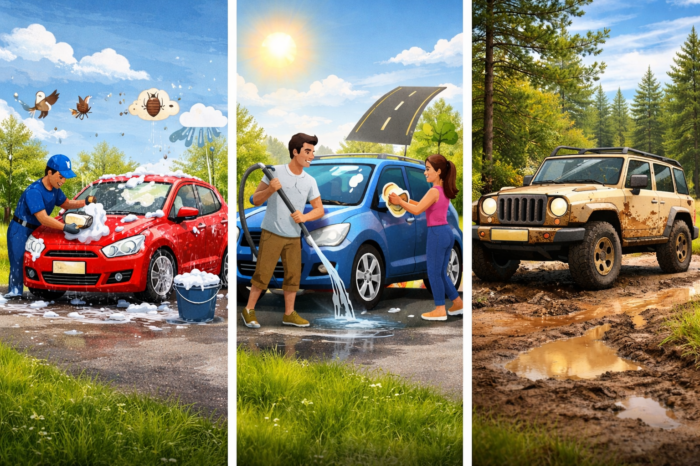
How to Deal with Snow, Mud, and Wet Roads: A Winter Maintenance Guide 

The arrival of winter brings specific challenges for those who want to keep their car in good condition. Snow, mud, and constantly wet roads create conditions that accelerates wear on several vehicle components, affecting not only appearance but also safety and mechanical durability. Therefore, understanding automotive winter maintenance is essential to avoid bigger problems throughout the season.  Unlike other times of the year, winter requires extra attention. In addition to the cold, factors such as constant moisture, mud residue, road salt, and sudden temperature changes directly affect paintwork, brakes, tires, suspension, and metal parts. As a result, adopting preventive care becomes a smart and cost-effective choice.  Why Is Winter So Harsh on Your Car?  During winter, vehicles are exposed to extreme conditions. Snow and mud easily accumulate in wheel wells, underbody areas, and suspension components. Moreover, wet roads increase contact with abrasive contaminants, which consequently accelerate wear on paintwork and metal parts.  In regions with snow, the use of salt and chemical agents to melt ice is common. However, these residues are highly corrosive. When not properly removed, they can cause premature oxidation, compromising the vehicle’s structural components. For this reason, winter maintenance should not be seen as optional, but as essential.  Caring for Paintwork and External Surfaces  Paintwork is one of the areas most affected during winter. Mud, dirt, and mineral particles easily adhere to the vehicle’s surface, especially on wet roads. In addition, constant moisture encourages staining and micro-abrasions.  Whenever possible, the vehicle should be washed frequently, even on cold days. This way, aggressive residues are removed before causing permanent damage. It is important to emphasize that washing should be done with appropriate products, avoiding overly aggressive solutions, as clear coat tends to be more sensitive at low temperatures.  In addition, applying waxes or sealants is highly recommended. These products create a protective layer that makes dirt removal easier and reduces mud adhesion. Consequently, the paint remains protected for longer, even under adverse conditions. In this case, we recommend using V80 Vonixx for paint protection.  Special Attention to Tires and Safety  On wet or snowy roads, tires play...

3 de January de 2026 5 minutes of reading
Get news in your email

Sign up to receive useful tips and content.

Newsletter