 Glass
Glass
The application of automotive window film, commonly known as tint, has become extremely common in vehicles. In addition to providing greater thermal comfort, reducing brightness, and increasing privacy, the film also helps protect the car’s interior from sun exposure.
However, after the installation of window film, many doubts usually arise about the correct way to clean the glass. Frequently, products that would normally be used on regular glass are applied without considering the presence of the film. As a result, damage to the tint may occur over time.
For this reason, it is important to understand which glass products can be used safely and which should be avoided when a vehicle has window film installed.
Furthermore, when the correct care is followed, the durability of the film tends to be significantly longer.
What automotive window film (tint) is
Before understanding cleaning care, it is important to understand how automotive window film works.
The film is made of thin layers of polyester that are applied to the inner side of the glass. These layers may contain specific treatments that help block part of the solar radiation, reduce heat, and control the passage of light.
Depending on the technology used, different benefits can be provided, such as:
However, despite offering several benefits, window film is a material that requires special care during cleaning.
This happens because the film layer can be sensitive to certain chemicals and aggressive cleaning methods.
Why some glass cleaners can damage window tint
In many cases, glass cleaning products contain chemical components that help dissolve grease, remove marks, and provide shine.
However, some of these products contain ammonia in their composition. Although ammonia is efficient for cleaning regular glass, it can damage window film.
When ammonia-based products are used frequently, some effects may occur, such as:
Additionally, in more severe situations, partial peeling of the film may occur.
For this reason, ammonia-based products should never be used on glass that has window tint installed.
What can be used to clean tinted windows
Fortunately, there are several safe options for cleaning windows when the vehicle has film installed.
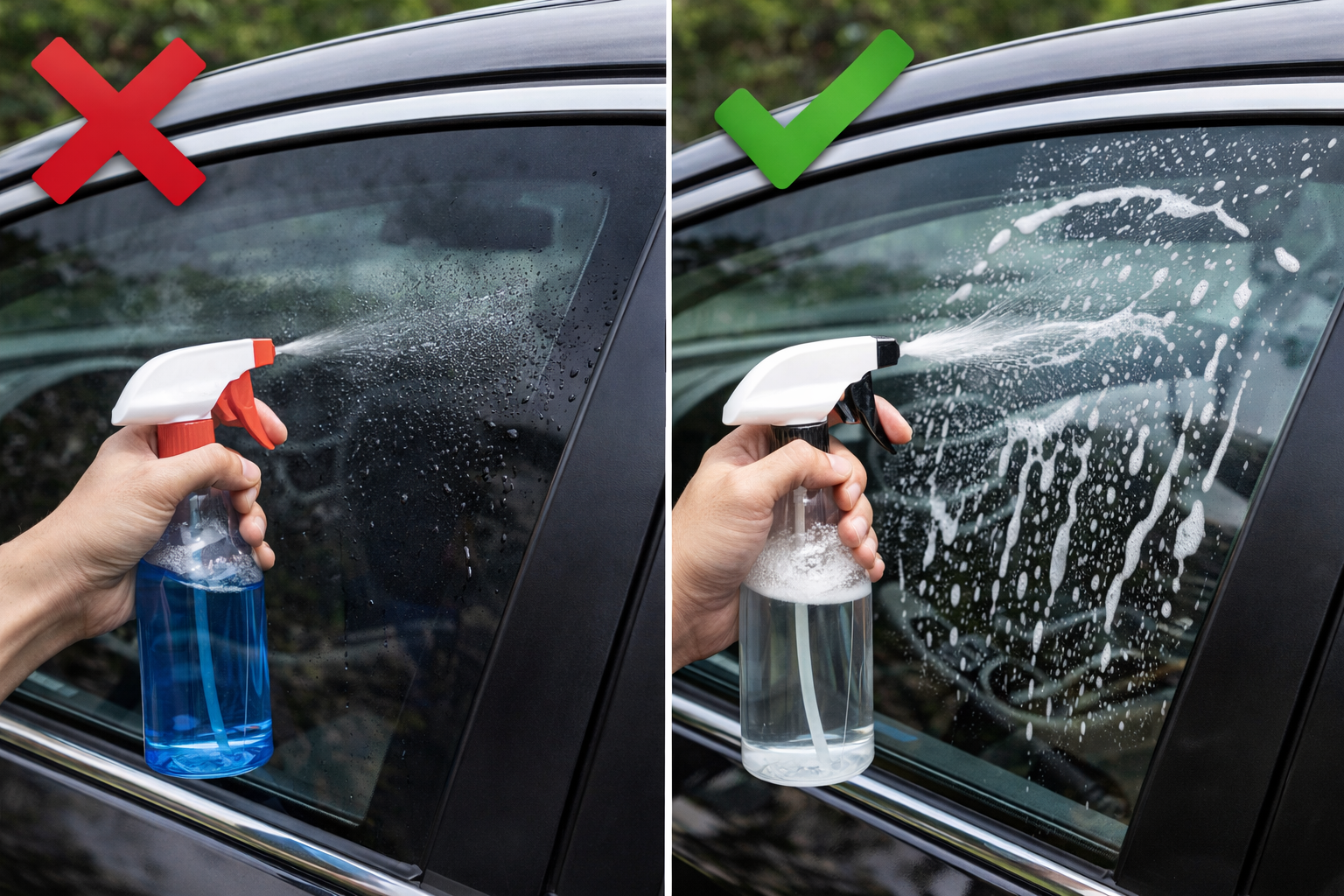
First, ammonia-free glass cleaners are the most recommended. These products are formulated specifically for automotive use and do not pose risks to the film.
Additionally, some neutral multi-purpose cleaners may also be used, as long as they are suitable for delicate surfaces. Using glass-specific products such as Glazy Vonixx is essential to maintain the original condition of the film while keeping the glass clean and protected.
Another important point is the correct use of cleaning accessories.
Soft microfiber towels are highly recommended because they help remove dirt without causing scratches or wear on the film.
Safe cleaning checklist for tinted windows:
When these practices are followed, cleaning can be performed safely.
What should not be used when cleaning tinted windows
Just as there are recommended products, some items should be avoided when cleaning windows with film.
Among the main items that should not be used are:
Ammonia-based products
As mentioned earlier, ammonia can degrade the film over time.
For this reason, household glass cleaners should not be used without checking the product composition.
Abrasive sponges
Rough sponges or abrasive fibers may cause micro-scratches on the surface of the film.
Although the damage may not be immediately noticeable, accumulated wear can compromise the appearance of the glass.
Blades or scrapers
Some people use blades to remove stubborn dirt from glass. However, when window film is present, this method may cut the material.
As a result, the film can be permanently damaged.
Hard brushes
Brushes with stiff bristles should also be avoided. Over time, they may cause marks and wear on the film.
Important care after window film installation
Another important point concerns the period immediately after the film is installed.
Normally, it is recommended to avoid cleaning the glass for a few days after installation.
This happens because the film bonding process is still stabilizing during this period. The presence of moisture between the glass and the material is common right after installation.
Therefore, contact with cleaning products or excessive friction may interfere with the film’s adhesion.
In general, it is recommended to wait between 3 and 7 days before performing any cleaning.
However, the waiting period may vary depending on the type of film and the installer’s recommendations.
How to keep tinted windows clean
Besides choosing the correct products, some practices help keep tinted windows clean and well preserved.
First, cleaning should be performed regularly. This helps prevent the buildup of heavy dirt.
Additionally, it is important to avoid using dirty or contaminated cloths, since dust particles may cause scratches during cleaning.
Another important precaution is to avoid applying excessive pressure during the cleaning process.
When gentle movements are used, the integrity of the film tends to be preserved for a longer time.
Finally, it is recommended to always use automotive-specific glass cleaning products, as they are developed considering the materials present in vehicles.
Benefits of properly caring for tinted windows
When proper care is taken, several benefits can be observed.
First, the lifespan of the film is extended. This means the material can maintain its original appearance for much longer.
Additionally, the transparency of the glass tends to be preserved, ensuring good visibility while driving.
Another important point is vehicle aesthetics. Well-maintained windows contribute to a cleaner and better-preserved appearance.
Finally, thermal comfort and protection against solar radiation continue to be maintained when the film remains in good condition.
Conclusion
The presence of automotive window film requires specific care during cleaning. Although tinted windows may look similar to regular glass, the film installed on the inner side can be sensitive to certain products and cleaning methods.
For this reason, products containing ammonia, abrasive accessories, and sharp tools should be avoided.
On the other hand, ammonia-free glass cleaners and soft microfiber towels can be used safely.
When these practices are followed, the window film tends to maintain its appearance, functionality, and durability for much longer.
Thus, in addition to preserving the tint, the driver also ensures clean windows, good visibility, and a more comfortable interior.
Sign up to receive useful tips and content.