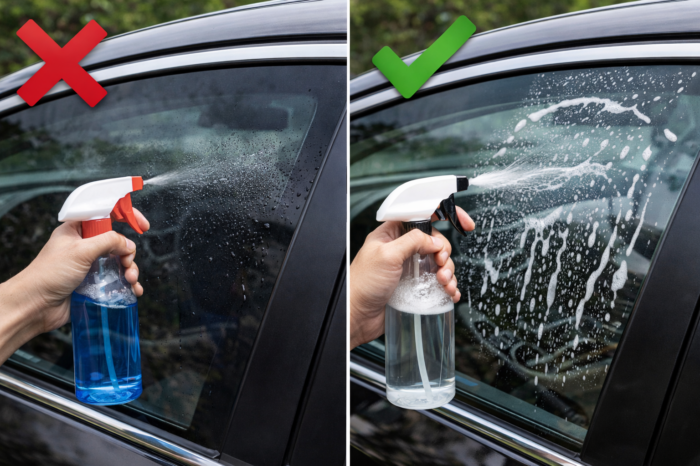
Glass Window Film (Tint) vs. Glass Cleaners: What You Can and Cannot Use The application of automotive window film, commonly known as tint, has become extremely common in vehicles. In addition to providing greater thermal comfort, reducing brightness, and increasing privacy, the film also helps protect the car's interior from sun exposure. However, after the installation of window film, many doubts usually arise about the correct way to clean the glass. Frequently, products that would normally be used on regular glass are applied without considering the presence of the film. As a result, damage to the tint may occur over time. For this reason, it is important to understand which glass products can be used safely and which should be avoided when a vehicle has window film installed. Furthermore, when the correct care is followed, the durability of the film tends to be significantly longer. What automotive window film (tint) is Before understanding cleaning care, it is important to understand how automotive window film works. The film is made of thin layers of polyester that are applied to the inner side of the glass. These layers may contain specific treatments that help block part of the solar radiation, reduce heat, and control the passage of light. Depending on the technology used, different benefits can be provided, such as: reduction of heat inside the vehicle reduction of glare caused by sunlight protection against UV rays increased privacy for occupants However, despite offering several benefits, window film is a material that requires special care during cleaning. This happens because the film layer can be sensitive to certain chemicals and aggressive cleaning methods. Why some glass cleaners can damage window tint In many cases, glass cleaning products contain chemical components that help dissolve grease, remove marks, and provide shine. ... April 25th, 2026
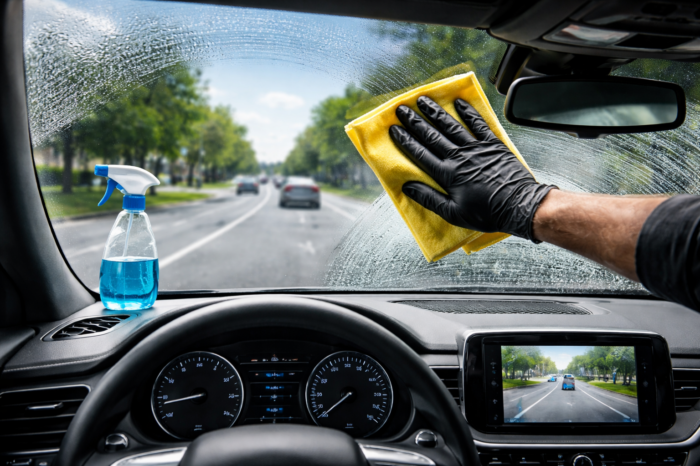
Glass Clean glass isn’t just about looks. It’s safety. Here’s why Many drivers clean their car windows only when they notice visible dirt. However, clean glass isn’t just about looks. It’s safety. That statement is not an exaggeration. On the contrary, it involves visibility, reaction time, and accident prevention. In this article, you’ll understand why keeping automotive glass clean directly impacts safety, what risks invisible grime creates, and how to build an efficient maintenance routine. Clean glass isn’t just about looks. It’s safety in any driving condition Vision is the primary sense used while driving. Defensive driving studies show that most decisions behind the wheel depend on visual perception. Therefore, when the glass has: Stains Micro-scratches An oily film Water spots Interior residue Visibility is immediately reduced. Even if the driver doesn’t consciously notice it, eye strain increases. Consequently, reaction time may decrease. So, clean glass isn’t just about looks. It’s safety because it directly affects how well you read the road environment. The impact of invisible grime Often, glass looks clean at first glance. However, under direct light or at night, reflections and halos appear. This happens because microscopic residues distort the way light passes through the glass. In addition, at night, oncoming headlights reflect more intensely when the windshield is contaminated. ... March 7th, 2026