 Protection
Paint protection is one of the most important steps in keeping a car shiny, looking new, and more resistant to external elements. Products such as waxes, sealants, and synthetic coatings are applied specifically to create a protective layer over the paint’s clear coat.
However, a very common question among vehicle owners is how to know when this protection stops working and needs to be reapplied. Many people believe the protection remains active for a long time without maintenance, while others end up reapplying products more frequently than necessary.
In practice, the durability of paint protection can vary significantly. This happens because factors such as climate, washing methods, sun exposure, pollution, and even where the car is parked directly influence how long the protection lasts.
For this reason, understanding how to identify the signs that paint protection has worn off is essential to keep the vehicle properly protected.
Moreover, when reapplication is performed at the right time, the paint finish tends to remain shiny and protected for much longer.
What automotive paint protection is
Before understanding when protection wears off, it is important to understand what it actually does.
Paint protection consists of applying a product that creates a protective layer over the clear coat. This layer acts as a barrier between the paint and external elements.
As a result, the direct impact of contaminants is reduced. Among the main elements that can affect paint are:
In addition, protection also helps enhance the paint’s shine and makes future washes easier.
However, over time, this protective layer naturally wears down. As a result, its effectiveness gradually decreases.
Why paint protection loses effectiveness
Protection applied to paint is not permanent. Even the most durable products eventually experience natural wear.
This happens because the vehicle’s surface is constantly exposed to external factors.
Among the main reasons for protection loss are:
Sun exposure Ultraviolet radiation can gradually degrade the protective layer.
Frequent washing During washes, friction from wash mitts, towels, and automotive shampoo may contribute to the gradual wear of protection.
Pollution and contaminants Industrial fallout, metallic particles, and aggressive dirt may accelerate the deterioration of the protective layer.
Rain and humidity Constant temperature changes and exposure to water can also influence durability.
For these reasons, paint protection tends to lose effectiveness over time.
Signs that paint protection has worn off
Fortunately, several clear signs can indicate when paint protection is no longer working.
By observing these signs, vehicle owners can determine the ideal time to reapply protection.
Below are the main indicators.
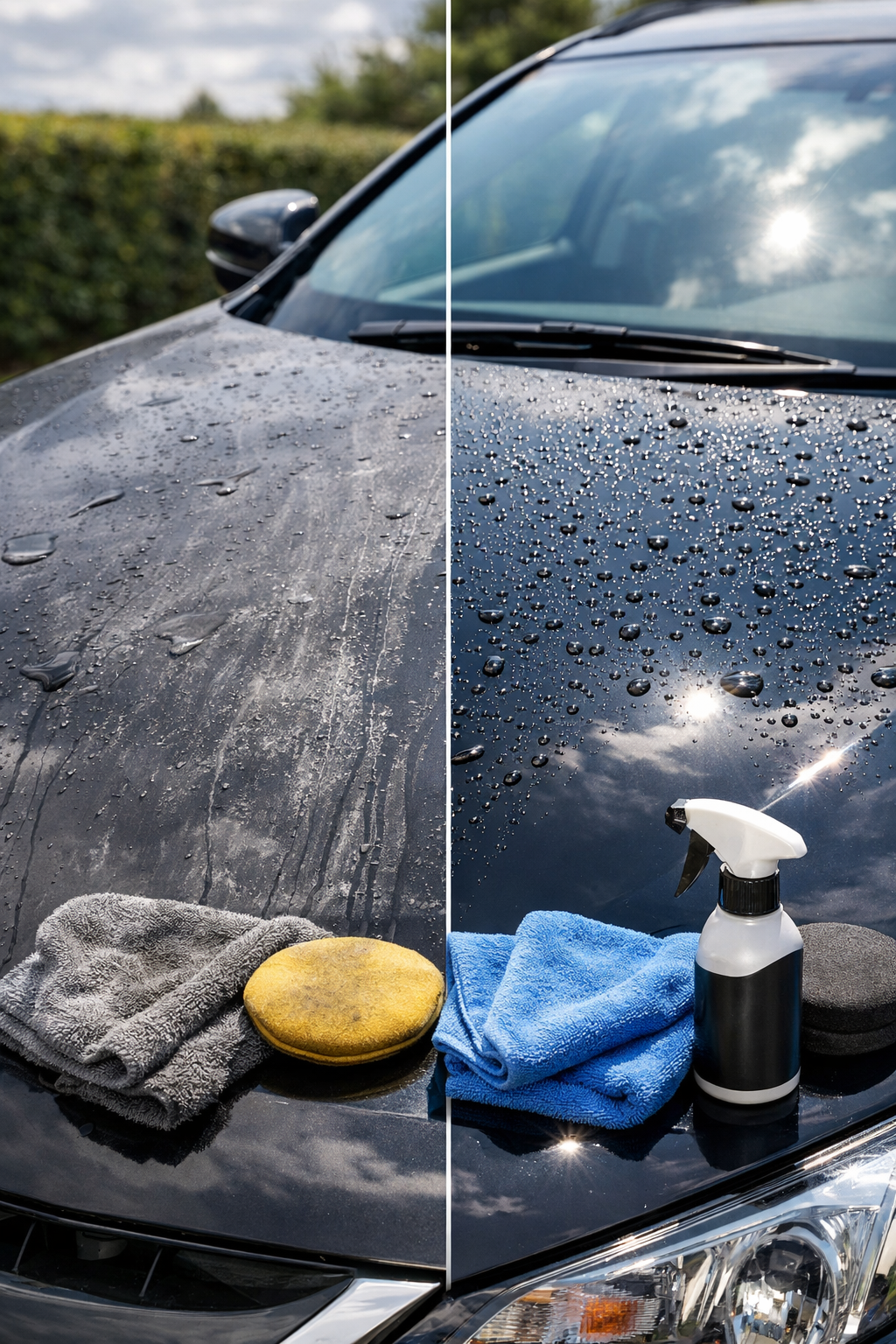
Water no longer forms beads on the paint
One of the most well-known signs of active paint protection is the hydrophobic effect.
When protection is active, water tends to form small, round droplets on the car’s surface. This behavior is known as the beading effect.
However, when the protection begins to wear down, this effect decreases.
Water starts to spread across the surface instead of forming defined droplets.
Therefore, if during washing or rain the water remains flat and spread across the panels, it may indicate that the protection has weakened.
Water takes longer to run off
Another common behavior of protected surfaces is the sheeting effect.
When protection is still active, water quickly runs off the paint.
However, when protection wears down, water tends to remain on the surface longer.
This can be noticed especially during the rinsing stage of a wash.
If water takes longer to flow off or remains pooled on the surface, the protection may be nearing the end of its lifespan.
The paint appears to lose shine
In addition to water repellency, protection also helps enhance the paint’s gloss.
When protection is active, the surface tends to show deeper reflections and a more uniform appearance.
On the other hand, when the protective layer wears down, the shine may appear reduced.
Even if the paint is clean, the finish may look less vibrant.
This is another sign that reapplication may be necessary.
Dirt starts to stick more easily
Protected surfaces typically have lower dirt adhesion.
This occurs because the protective layer reduces direct contact between contaminants and the clear coat.
However, when protection wears off, dust, mud, and pollutants begin to adhere more easily.
As a result, the car may become dirty more quickly.
Additionally, removing dirt during washing may become slightly more difficult.
Washing requires more effort
Another common sign of protection loss is increased difficulty during washing.
When the car is protected, much of the dirt can be removed easily using only water and automotive shampoo.
However, when protection disappears, dirt may require more effort to remove.
This behavior also indicates that the surface is more exposed.
When to reapply paint protection
The ideal reapplication frequency depends on the type of product used.
In general, the most common intervals are:
However, these intervals may vary depending on how the vehicle is used.
Therefore, observing the signs mentioned earlier is usually the most reliable way to determine the right moment for reapplication.
Care before reapplying paint protection
Before reapplying any protection, some preparation steps should be performed.
First, the vehicle should be washed properly.
Additionally, paint decontamination may be recommended if bonded contaminants are present on the surface.
In some cases, a light polishing process may also be performed to restore gloss before applying new protection.
These procedures help ensure better product adhesion and longer durability of the reapplied protection.
Conclusion
Paint protection plays an essential role in preserving a vehicle’s appearance. However, this protective layer is not permanent and naturally wears down over time.
Fortunately, several clear signs can indicate when the protection has reached the end of its lifespan. Among them are reduced hydrophobic effect, lower paint gloss, increased dirt adhesion, and greater effort required during washing.
When these signs are identified, paint protection can be reapplied to restore the surface’s performance.
By keeping the protection active, the vehicle tends to maintain a shinier appearance, better resistance against contaminants, and easier cleaning in everyday use.
Sign up to receive useful tips and content.