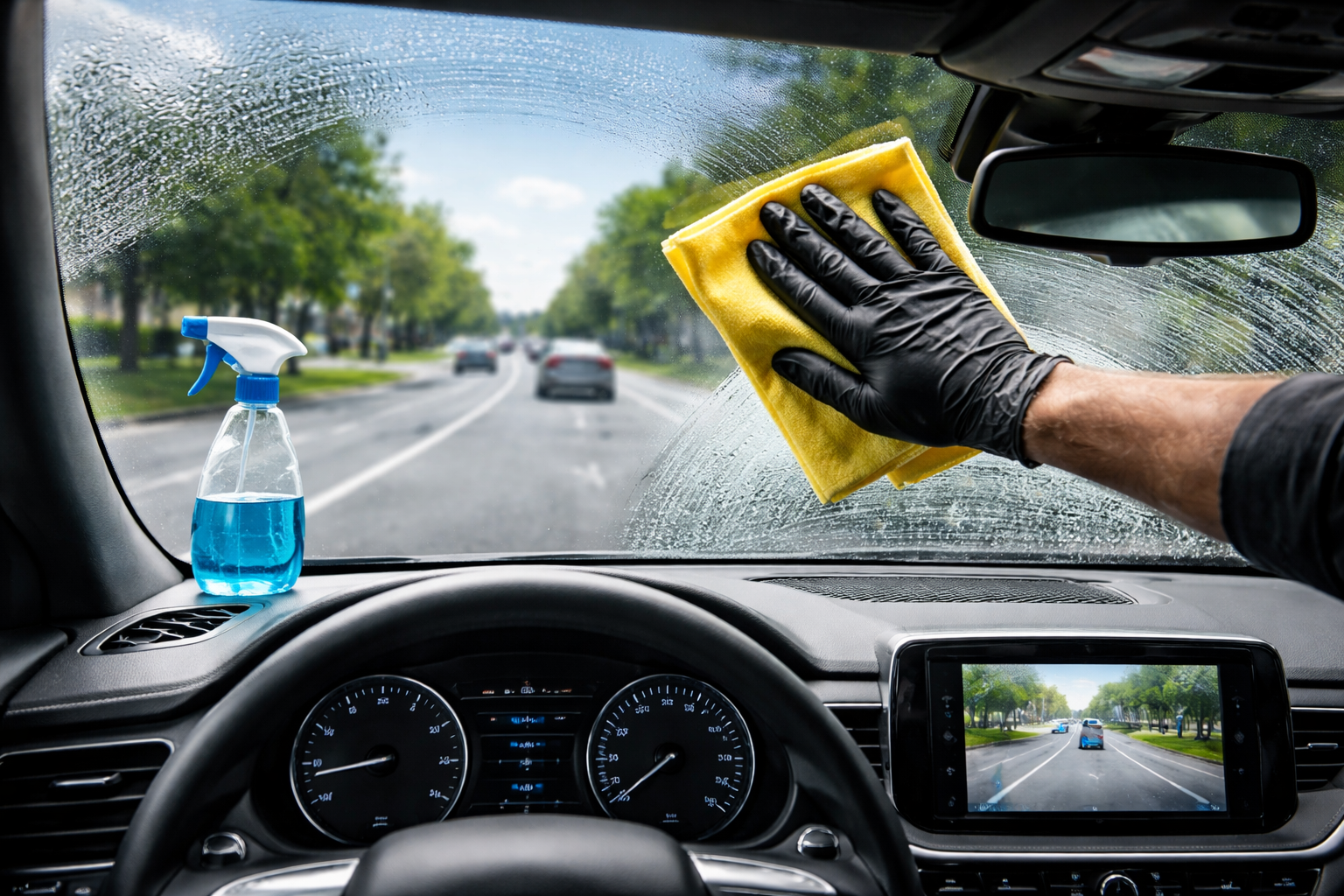
 Glass
Glass
Many drivers clean their car windows only when they notice visible dirt. However, clean glass isn’t just about looks. It’s safety.
That statement is not an exaggeration. On the contrary, it involves visibility, reaction time, and accident prevention.
In this article, you’ll understand why keeping automotive glass clean directly impacts safety, what risks invisible grime creates, and how to build an efficient maintenance routine.
Clean glass isn’t just about looks. It’s safety in any driving condition
Vision is the primary sense used while driving. Defensive driving studies show that most decisions behind the wheel depend on visual perception.
Therefore, when the glass has:
Visibility is immediately reduced.
Even if the driver doesn’t consciously notice it, eye strain increases. Consequently, reaction time may decrease.
So, clean glass isn’t just about looks. It’s safety because it directly affects how well you read the road environment.
The impact of invisible grime
Often, glass looks clean at first glance. However, under direct light or at night, reflections and halos appear.
This happens because microscopic residues distort the way light passes through the glass.
In addition, at night, oncoming headlights reflect more intensely when the windshield is contaminated.
The result?
Therefore, regular cleaning doesn’t only improve the car’s appearance. It preserves optical clarity.
Night driving requires flawless glass
At night, any smudge is visually amplified.
If the glass has interior grease, for example, headlights can create a fog-like effect.
Also, small marks turn into large distorted areas.
That’s why clean glass isn’t just about looks. It’s safety—especially for night driving.
A well-maintained window reduces reflections and improves sharpness in critical situations.
Rain: the most critical moment
On rainy days, the importance increases even more.
When the glass is clean and protected:
On the other hand, contaminated glass makes water drainage harder.
In addition, built-up dirt compromises wiper performance, causing dragging and scratches.
Therefore, keeping the glass clean reduces risks in adverse conditions.
Interior glass matters too
Many drivers clean only the outside. However, the inside surface accumulates residue from:
This interior film causes faster fogging and reduces transparency.
Consequently, the driver may struggle with sudden lighting changes, such as entering tunnels.
So, clean glass isn’t just about looks. It’s safety inside the cabin too.
The link between dirty glass and visual fatigue
When visibility isn’t fully clear, the brain must work harder to interpret information.
This constant effort can cause:
On long trips, that affects concentration.
Therefore, keeping the windshield spotless supports comfort and focus while driving. Use specific products like Glazy Vonixx, a 4-in-1 product that cleans, protects, conditions, and helps reduce minor marks.
Mineral stains and optical distortion
Water spots rich in minerals create tiny opaque areas.
These stains change light refraction, causing small distortions.
Although they seem subtle during the day, they become dangerous at night.
Also, if they aren’t removed quickly, they can bond permanently.
So, preventive maintenance avoids damage and preserves safety.
The role of rain repellent
After proper cleaning, applying a rain repellent creates a protective layer—for example, using a sealant like SiO2 Pro Vonixx.
This layer:
However, the product only works correctly on a decontaminated surface.
Otherwise, performance decreases.
Therefore, proper preparation comes before protection.
Common mistakes that compromise safety
Even careful drivers make mistakes that reduce cleaning effectiveness:
These issues create invisible marks that only show up under critical lighting.
That’s why technique matters as much as frequency.
Ideal cleaning frequency
To maintain a safety standard, it’s recommended to:
Regular maintenance prevents severe buildup.
Also, a quick inspection before long trips increases predictability.
Preventive safety starts with the details
Many people associate safety only with brakes and tires. However, visibility is just as essential.
Without clear vision, any system loses effectiveness.
Clean glass isn’t just about looks. It’s safety because it directly affects vehicle control.
Conscious drivers understand that small habits prevent major risks.
A culture of car care
The auto detailing market has evolved.
Today, it’s understood that aesthetics and function go together.
Crystal-clear glass shows care. However, more than that, it provides active protection against accidents.
In addition, customers who keep a cleaning routine report greater driving comfort.
Therefore, care isn’t a luxury. It’s responsibility.
Conclusion: clear vision saves time and prevents risks
Clean glass isn’t just about looks. It’s safety.
It reduces reflections, improves sharpness, decreases visual fatigue, and increases reaction time.
In addition, proper maintenance extends the life of the glass and the wipers.
In traffic, seconds make a difference—and those seconds start with clean, precise visibility.
Taking care of your windows is one of the simplest and most effective ways to drive more safely.
Sign up to receive useful tips and content.