 Protection
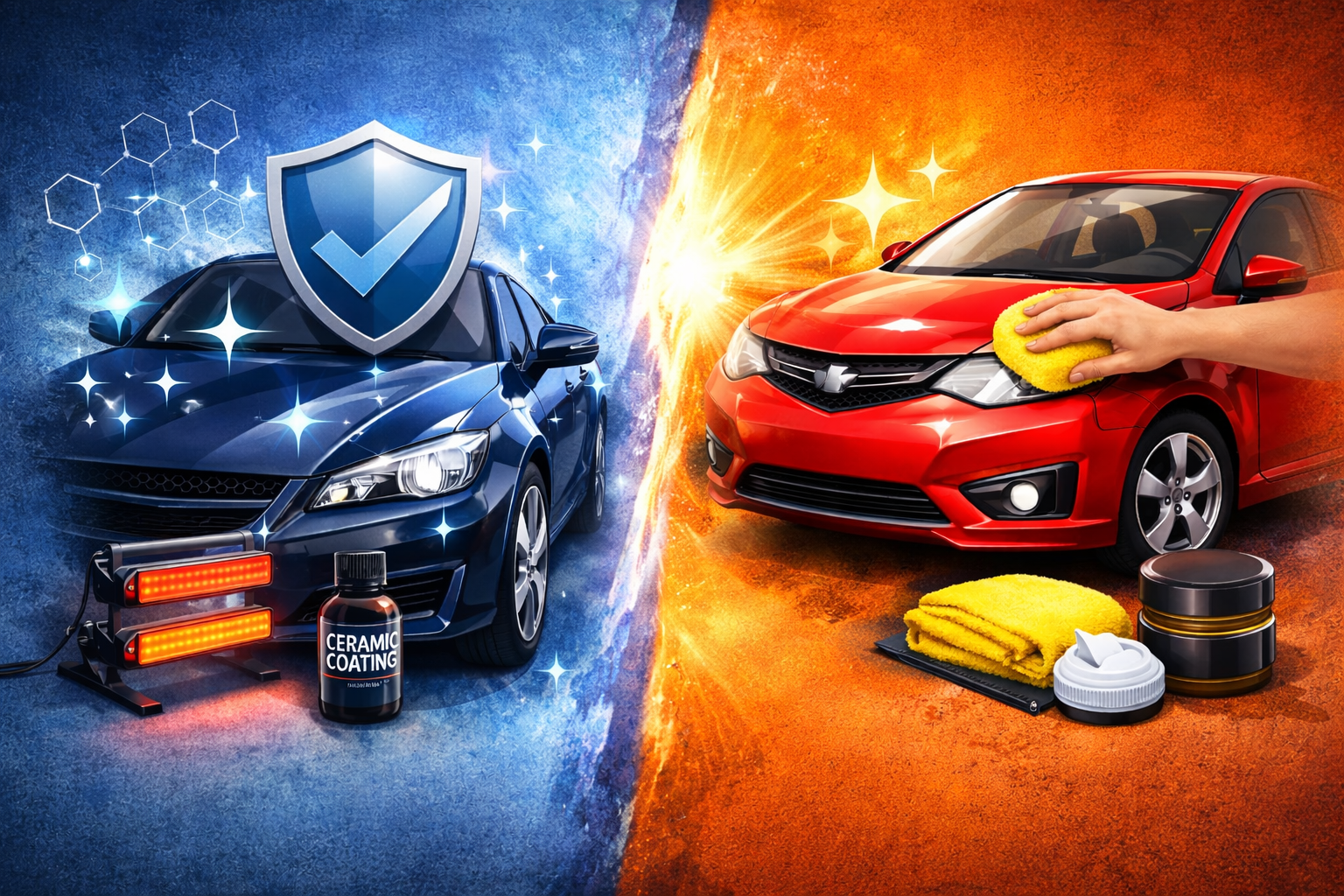
The pursuit of protection, shine, and paint preservation is one of the biggest concerns for anyone who takes care of their car. As a result, two solutions stand out in the world of automotive detailing: ceramic coating and waxing. Although both share the same goal—protecting and enhancing the paint—they work in very different ways.
So, after all, ceramic coating vs. waxing: which is better? The answer depends on your profile, how you use the vehicle, and the level of protection you want.
In this comprehensive article, you’ll understand the differences, advantages, disadvantages, and when to choose each of these options.
What is automotive ceramic coating?
Automotive ceramic coating, also known as ceramic coating, is an advanced paint protection process. It uses silica-based (SiO₂) products that, once applied, create a rigid and highly resistant layer over the clear coat.
This layer forms a kind of invisible “shield” that chemically bonds to the paint, offering long-lasting protection against external agents. For this reason, ceramic coating is widely used by professionals and specialized detailers.
In addition, ceramic coating significantly reduces dirt adhesion, makes cleaning easier, and delivers intense, long-lasting gloss. We recommend V-Paint Vonixx for paint coating because, in addition to shine, it provides extended protection for up to 3 years.
What is automotive waxing?
Automotive waxing is a more traditional and accessible technique. It uses natural, synthetic, or hybrid waxes that create a superficial protective layer over the paint. Products such as Blend Paste Wax and Native Spray Wax, both from Vonixx, stand out in this category.
Unlike ceramic coating, waxing does not chemically bond to the clear coat. Instead, it forms a temporary film that protects against dust, water, light contamination, and sunlight for a shorter period.
On the other hand, waxing stands out for its ease of application and can be done at home without the need for equipment or advanced technical preparation.
Main differences between ceramic coating and waxing
Although both techniques share the same objective, their characteristics are quite different.
Durability
While ceramic coating can last from 1 to 3 years, depending on the product and maintenance, waxing usually lasts from a few weeks to a few months.
Level of protection
Ceramic coating offers high chemical, thermal, and mechanical resistance, protecting against UV rays, bird droppings, tree sap, and severe contamination. Waxing, on the other hand, provides light to moderate protection, ideal for everyday use.
Gloss and finish
Both deliver shine, but in different ways. Ceramic coating creates a deeper, glass-like gloss, while waxing provides a warm, natural shine that is highly appreciated by enthusiasts.
Maintenance
Ceramic-coated vehicles require specific care, such as proper washing and suitable products. In contrast, waxing allows for frequent reapplications with simple maintenance.
Advantages of automotive ceramic coating
Ceramic coating is considered the most complete option when it comes to paint protection. Its main benefits include:
Additionally, when applied correctly, ceramic coating adds value to the vehicle, even serving as a differentiator in resale.
Advantages of automotive waxing
Despite being simpler, waxing remains extremely relevant. Its main advantages include:
For this reason, waxing is widely used by both beginners and automotive detailing enthusiasts.
When should you choose ceramic coating?
Ceramic coating is recommended when:
It is also very common on premium vehicles or in more complete detailing projects.
When should you choose waxing?
Waxing is the best option when:
In fact, many professionals use waxing as maintenance for ceramic-coated vehicles, as long as compatible products are used.
Ceramic coating vs. waxing: which is better after all?
The correct answer is: it depends on your goal.
If you are looking for extreme protection, durability, and less maintenance, ceramic coating is the best choice.
On the other hand, if you prefer flexibility, lower cost, and constant maintenance, waxing meets these needs perfectly.
Therefore, neither option is superior in all scenarios. Both are effective when used correctly and in the appropriate context.
Conclusion
Understanding the difference between ceramic coating and waxing is essential to making the right choice for protecting your vehicle’s paint. While ceramic coating offers advanced technology and resistance, waxing delivers practicality and excellent value for money.
The most important thing is to align your choice with your usage style, maintenance routine, and expected results. This way, your car’s paint will remain protected, glossy, and valuable for much longer.
Sign up to receive useful tips and content.