 Plastics
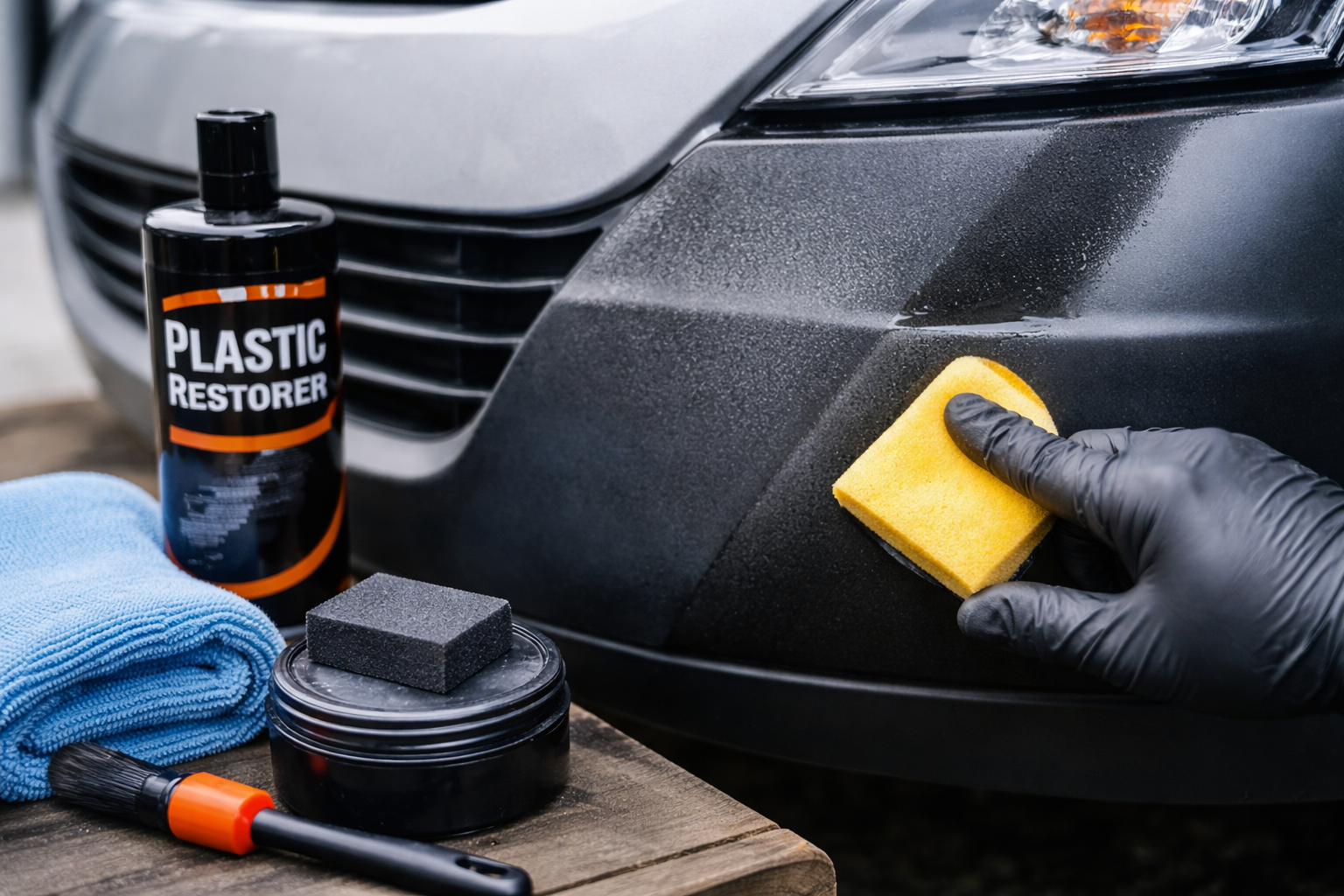
Over time, automotive plastics—both interior and exterior—undergo natural wear. Constant exposure to sunlight, rain, pollution, and even the improper use of products causes these surfaces to lose their original color, become faded, dry, and aged in appearance. Therefore, plastic restoration is no longer just an aesthetic concern; it has become an essential step in vehicle preservation.
In addition, when plastics do not receive proper treatment, their lifespan is reduced. Small cracks may appear, texture can be compromised, and in more extreme cases, complete material degradation can occur. Thus, investing in the right products and techniques is crucial to maintaining the car’s visual and functional standards.
What does restoring automotive plastics mean?
Restoring automotive plastics means bringing back the surface’s original appearance by restoring color, uniformity, and protection. Unlike simple cleaning, this process involves applying specific products that nourish the material, create a protective layer, and help slow down premature aging.
In this context, it is important to highlight that restoration can be performed on both interior plastics—such as dashboards, consoles, and door panels—and exterior plastics, such as bumpers, mirrors, and trim. However, each type of surface requires a different solution.
Main causes of plastic wear
Before choosing which option to use, it is essential to understand why plastics degrade. Among the most common factors are:
As a result, a dull and faded appearance becomes visible, compromising the vehicle’s overall aesthetics.
Which options should be used to restore plastics?
1. Plastic-specific cleaners
Before any restoration, proper cleaning must be performed. Products developed specifically for plastics remove deep dirt without damaging the material. In addition, oily residues and embedded dust are eliminated, preparing the surface for subsequent treatment. We recommend using Sintra Vonixx, a bactericidal cleaner that not only cleans but also eliminates fungi and bacteria present on plastic surfaces.
During this process, it is recommended to use detailing brushes, soft brushes, or microfiber towels, as aggressive contact can cause scratches. This ensures a clean and uniform base.
2. Silicone-based plastic revitalizers
Silicone-based revitalizers are widely used due to their immediate visual effect. They restore shine and dark color to plastics, especially exterior ones. However, this type of product tends to offer protection for a shorter period.
Still, when applied correctly, the aesthetic result is satisfactory. However, excess should be avoided, as buildup can leave the surface greasy. In this category, the use of Restaurax Vonixx is recommended.
3. Plastic restorers with UV protection
A more advanced option includes restorers that, in addition to revitalizing, create a barrier against solar rays. These products penetrate the plastic, nourishing the material and providing long-lasting protection.
Thus, the effect is not only visual but also functional. Durability is usually greater compared to conventional products, making them ideal for those seeking long-term maintenance. In this category, Tryon Vonixx stands out as a 3-in-1 product, suitable for interior plastics, exterior plastics, and even rubber surfaces.
4. Plastic sealants and coatings
For those seeking maximum durability, sealants and coatings designed specifically for plastics are an excellent alternative. They create a strong protective layer that helps prevent fading and makes future cleaning easier.
Although application requires greater care, the final result delivers a high aesthetic standard and superior protection. For this reason, this type of solution is widely used in professional automotive detailing. In this category, the top product is V-Plastic Vonixx, a high-quality, highly resistant plastic coating.
5. Natural treatments vs. professional products
Some people resort to homemade solutions, such as oils or multi-purpose products. However, these alternatives are not recommended, as they can stain, attract dirt, and accelerate plastic degradation over time.
In contrast, professional products are specifically formulated for this type of material. Therefore, they offer safety, performance, and consistent results.
Difference between interior and exterior plastics
Although both are made of polymers, interior and exterior plastics have different needs. Interior plastics require a drier finish, a smooth touch, and dust protection. Exterior plastics, on the other hand, need greater resistance to sunlight, water, and pollution.
Therefore, a suitable product must always be used for each application. This prevents premature wear and undesirable results.
Ideal restoration frequency
The frequency of plastic restoration varies according to vehicle use and environmental exposure. In general:
However, when sealants or coatings are used, this interval can be significantly longer.
Common mistakes when restoring plastics
Some mistakes are frequently made and should be avoided:
Consequently, these mistakes compromise results and may cause stains or accelerated wear.
Benefits of proper plastic restoration
When performed correctly, plastic restoration offers several benefits, such as:
Therefore, it is an essential care step for anyone who wants to keep their car looking new.
Conclusion
Automotive plastic restoration is an indispensable process for preserving both the aesthetics and durability of a vehicle. By choosing the right options—from cleaning to protection—superior results are achieved. In addition, using specific products ensures safety, efficiency, and a professional finish.
Thus, investing in a proper care routine not only improves the car’s appearance but also extends the lifespan of materials, maintaining a high visual standard for much longer.
Sign up to receive useful tips and content.