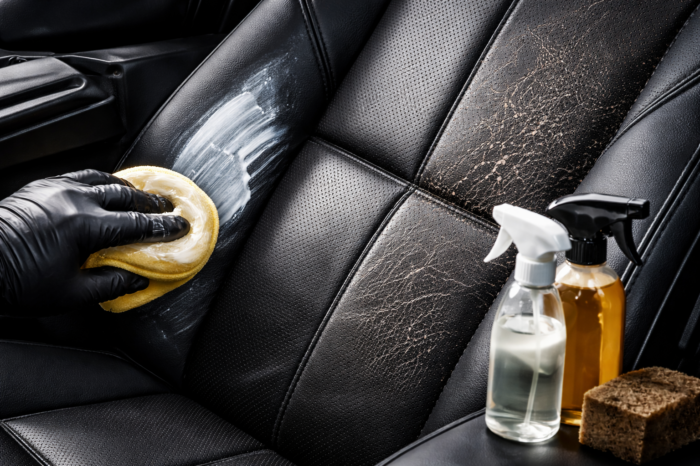
Leather What you apply to leather can dry it out completely: how to prevent damage and keep leather hydrated If you’ve ever looked at your car seat and thought, “It looks lifeless,” know that this almost never happens out of nowhere. In practice, dried-out leather is the result of the wrong routine, the wrong products, and—most importantly—a very common habit: applying anything and assuming that “if it’s good for cleaning, it’s good for preserving.” But it isn’t. What you apply to leather can dry it out completely—and when dryness shows up, it often comes with loss of softness, artificial shine, color changes, and even cracking. And here’s an important point: automotive leather isn’t a “raw” surface. It usually has a finish (a protective layer) and requires specific care. That means daily stressors like heat, friction, and sweat already cause natural wear. When you add unsuitable products, the process speeds up. So, if your goal is to keep your interior looking premium for much longer, it’s worth learning the basics the right way. In this article, you’ll understand why some products ruin leather, how to spot early signs of dryness, what to do to prevent it, and a safe, step-by-step cleaning and conditioning routine—without guesswork. Why does leather dry out? Dryness happens when leather loses flexibility and becomes “stiff,” with a rough feel and a dull appearance. This can occur for three main reasons: Heat and sun exposure The inside of a car can turn into a greenhouse. Over time, high temperatures speed up degradation and shorten the lifespan of the leather’s protective finish. Built-up dirt and friction ... March 28th, 2026