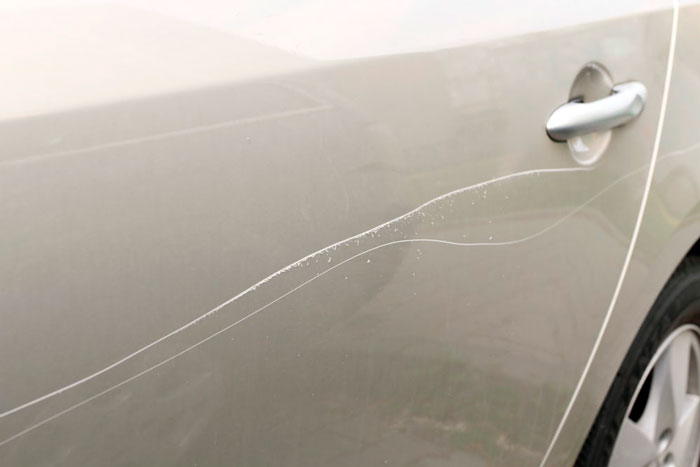
Details How to Prevent Scratches and Stains on Your Car’s Glass Why does automotive glass require specific care? Car glass is one of the most important elements for both safety and aesthetics. In addition to ensuring proper visibility while driving, it also contributes to the vehicle’s overall visual finish. However, scratches and stains are recurring issues and often result from simple mistakes in cleaning and maintenance. Over time, glass is exposed to dust, acid rain residues, pollution, tree sap, bird droppings, and even metallic particles. When these contaminants are not properly removed, the surface can develop stains, a dull appearance, and micro-scratches. Therefore, specific care must be adopted to preserve the glass’s transparency and integrity. Main causes of scratches on car glass Before learning how to prevent scratches, it is essential to understand how they occur. In many cases, the problem is not vehicle use itself, but rather the way cleaning is performed. The most common causes include: Using unsuitable cloths, such as rough or dirty fabrics Sponges contaminated with sand or dust Dry cleaning without proper lubrication Excessively aggressive circular motions Worn windshield wiper blades As a result, small scratches gradually accumulate and compromise visibility, especially at night or under intense light. What causes stains on automotive glass? ... February 14th, 2026
Details Start the Year with Your Car Up to Date: A Complete Automotive Detailing Checklist Starting a new year with a well-maintained car goes far beyond aesthetics. Automotive detailing is a set of practices that preserves paintwork, protects the interior, increases material durability, and directly contributes to the vehicle’s value. Therefore, adopting a complete automotive detailing checklist at the beginning of the year is a smart, cost-effective, and strategic decision. Additionally, the start of the year is usually the ideal time to correct wear accumulated over previous months, whether from exposure to sun, rain, dust, pollution, or intense daily use. In this way, establishing a care routine helps prevent bigger problems in the future and keeps the car looking new at all times. Below, you’ll find a complete checklist, organized by stages, to keep your car up to date and protected from the very first months of the year. 1. Complete and Safe Exterior Wash Before any detailing step, proper washing is essential. However, it must be done with suitable products and safe techniques to avoid scratching the paint. First, perform a pre-wash with V-Mol Vonixx to remove loose dirt. Then, use a neutral automotive shampoo such as V-Floc and paint-safe wash mitts. Furthermore, the two-bucket wash method significantly reduces the risk of micro-scratches. Another important point is drying. It should be done with high-absorption microfiber towels such as the Vonixx Maxx Drying Towel, avoiding common cloths that can mark the clear coat. 2. Paint Decontamination Even after a thorough wash, paintwork may still contain invisible contaminants such as industrial fallout, metallic particles, and tree sap.... January 24th, 2026
Details Ideal Gifts for Car and Motorcycle Lovers: Ideas That Combine Passion, Care, and Style Finding ideal gifts for car and motorcycle lovers may seem challenging at first. However, for those who live the automotive passion, any item related to care, customization, protection, or experience immediately sparks interest. After all, cars and motorcycles are not just vehicles, but extensions of their owners’ personalities. In addition, gifting someone who loves vehicles goes far beyond something generic. When a present is chosen strategically, it shows attention to detail and appreciation for this lifestyle. As a result, automotive items become useful, long-lasting, and emotionally meaningful gifts. Throughout this article, you will find creative, functional, and spot-on gift ideas—both for those who enjoy caring for the vehicle’s appearance and for those who value comfort, organization, and the driving or riding experience. Why Is Choosing Automotive Gifts a Good Idea? First of all, it is important to understand that the automotive world offers a huge variety of options. From care and aesthetic products to accessories and personalized items, there is always something that matches the recipient’s profile. In addition, gifts related to cars and motorcycles tend to be well used. Unlike generic decorative items, they are used frequently and become part of everyday routines. Therefore, the gift does not get forgotten. Another relevant point is that many of these products contribute to vehicle value, increasing durability and preserving appearance over time. 1. Car Care and Detailing Kits Among the ideal gifts for car and motorcycle lovers, car care and detailing kits are at the top of the list. This is because caring for the vehicle is, for many, a true ritual. These kits may include: Automotive shampoo (V-Floc Vonixx) Interior cleaner (Sintra Vonixx) Wax or sealant (Blend Paste Wax Vonixx) Microfiber towels ... January 10th, 2026
Details How to Deal with Snow, Mud, and Wet Roads: A Winter Maintenance Guide The arrival of winter brings specific challenges for those who want to keep their car in good condition. Snow, mud, and constantly wet roads create conditions that accelerates wear on several vehicle components, affecting not only appearance but also safety and mechanical durability. Therefore, understanding automotive winter maintenance is essential to avoid bigger problems throughout the season. Unlike other times of the year, winter requires extra attention. In addition to the cold, factors such as constant moisture, mud residue, road salt, and sudden temperature changes directly affect paintwork, brakes, tires, suspension, and metal parts. As a result, adopting preventive care becomes a smart and cost-effective choice. Why Is Winter So Harsh on Your Car? During winter, vehicles are exposed to extreme conditions. Snow and mud easily accumulate in wheel wells, underbody areas, and suspension components. Moreover, wet roads increase contact with abrasive contaminants, which consequently accelerate wear on paintwork and metal parts. In regions with snow, the use of salt and chemical agents to melt ice is common. However, these residues are highly corrosive. When not properly removed, they can cause premature oxidation, compromising the vehicle’s structural components. For this reason, winter maintenance should not be seen as optional, but as essential. Caring for Paintwork and External Surfaces Paintwork is one of the areas most affected during winter. Mud, dirt, and mineral particles easily adhere to the vehicle’s surface, especially on wet roads. In addition, constant moisture encourages staining and micro-abrasions. Whenever possible, the vehicle should be washed frequently, even on cold days. This way, aggressive residues are removed before causing permanent damage. It is important to emphasize that washing should be done with appropriate products, avoiding overly aggressive solutions, as clear coat tends to be more sensitive at low temperatures. In addition, applying waxes or sealants is highly recommended. These products create a protective layer that makes dirt removal easier and reduces mud adhesion. Consequently, the paint remains protected for longer, even under adverse conditions. In this case, we recommend using V80 Vonixx for paint protection. Special Attention to Tires and Safety On wet or snowy roads, tires play... January 3rd, 2026
Details The Pleasure of Driving a Clean Car Even in Winter: Comfort, Protection, and Well-Being on Cold Days When temperatures drop, many people reduce the frequency of car cleaning and end up neglecting the vehicle. However, the pleasure of driving a clean car in... December 24th, 2025
Details Neutral pH Shampoo Doesn’t Clean Vehicles: Myth or Truth? When it comes to automotive detailing, many doubts and claims arise that don’t always reflect reality. One of the most common is: “neutral pH shampoo doesn’t... November 21st, 2025
Details Sand and Dirt Buildup on Car Mats: How to Clean Without Effort Anyone who drives daily knows that dirt on car mats is unavoidable. Sand, dust, and soil enter every time someone steps inside, and over time the... October 24th, 2025
Details Deep Car Scratches: When to Polish and When to Repaint Keeping your car in perfect condition is every driver’s goal. However, small accidents and natural wear and tear often result in scratches. Some scratches are superficial... October 3rd, 2025
Details Why Your Car’s Color Fades Faster – and How to Prevent It Have you noticed that, over time, your car’s color loses its intensity, becoming dull or lifeless? This is a more common problem than it seems, and... September 26th, 2025
Details What Is the “Two Bucket Method” and Why It Protects Your Car If you’ve ever washed your car and, the next day, noticed micro-scratches or circular marks in the paint, you should know this is more common than... September 19th, 2025