 Sem categoria
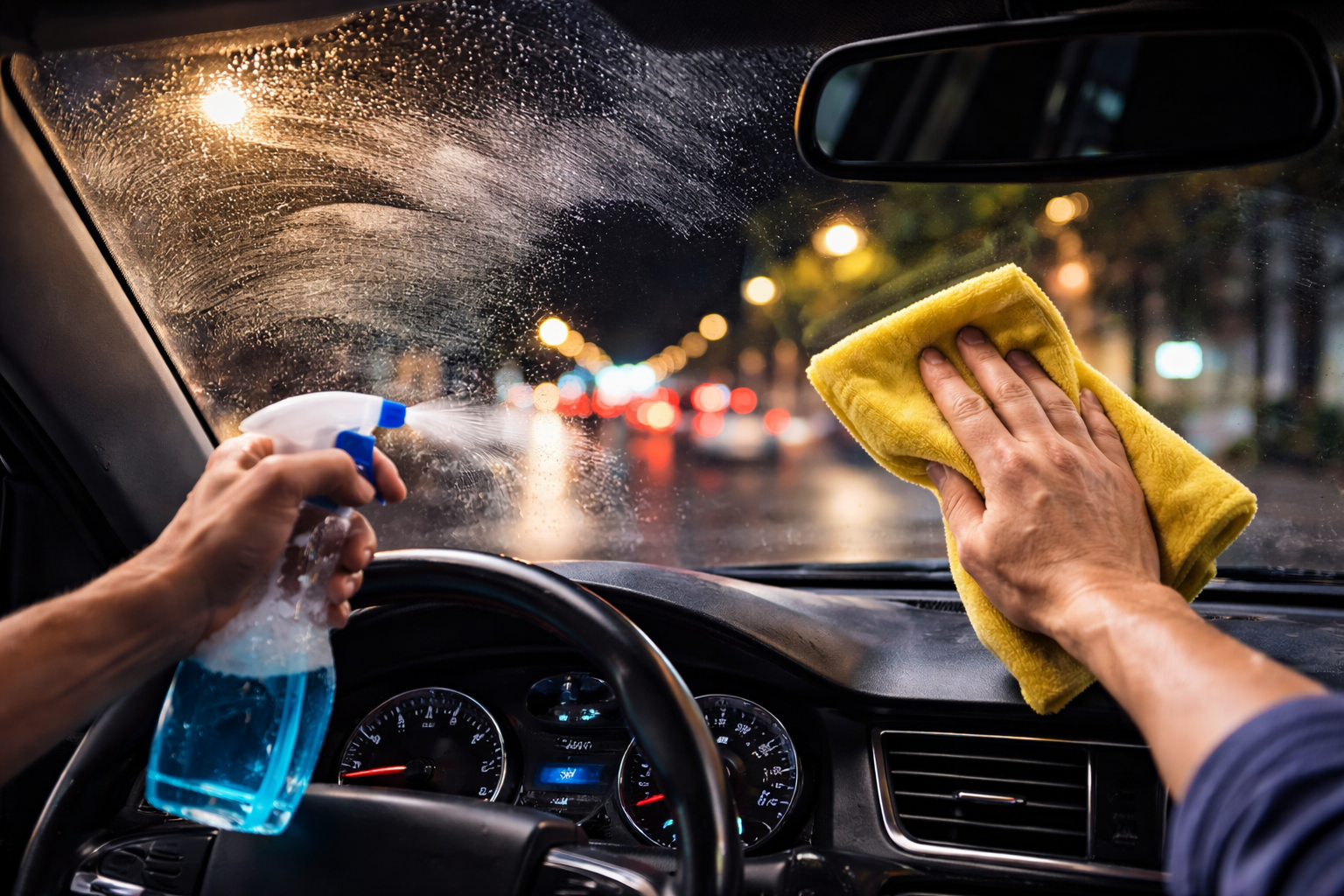
Driving at night already requires more attention. However, when the windshield has stains, glare increases and visibility drops significantly. Many drivers notice halos around lights, streaks that seem impossible to remove, or a hazy layer that becomes much more visible after sunset.
Although this issue appears suddenly, it usually develops over time. Dirt, residues, and improper cleaning techniques gradually affect the glass surface. As a result, what looks like a minor problem during the day turns into a serious visibility concern at night.
Therefore, understanding how to prevent windshield stains that affect night driving is essential for both safety and long-term glass maintenance. In this article, you will learn the causes, the most common mistakes, and the best practices to keep your windshield clear at all times.
Why windshield stains become worse at night
First, it is important to understand why this problem is more noticeable after dark.
During the day, natural light spreads evenly across the glass. However, at night, artificial light sources such as headlights and street lamps hit the windshield at specific angles. As a result:
In addition, even small amounts of contamination can distort light. Consequently, visibility decreases, and eye strain increases.
For this reason, what seems like a clean windshield during the day may still contain residues that affect night driving.
Main causes of windshield stains
Several factors contribute to windshield contamination.
1. Residue buildup
Over time, the glass accumulates:
These residues form a thin film that becomes visible under certain lighting conditions.
2. Water spots and mineral deposits
Rainwater and tap water contain minerals. When water evaporates, these minerals remain on the glass.
As a result:
3. Improper cleaning products
Using unsuitable products often creates more problems than solutions.
For example:
4. Dirty or worn wiper blades
Wiper blades play a direct role in glass condition.
When they are dirty or worn:
Common mistakes that worsen the problem
Many drivers unintentionally make mistakes that increase windshield staining.
Some of the most common include:
Although these actions seem harmless, they often lead to uneven cleaning and residue buildup.
How to prevent windshield stains effectively
Now that you understand the causes, it becomes easier to prevent the issue.
1. Clean the windshield regularly
Regular cleaning prevents contaminants from building up.
Instead of waiting until the glass looks dirty:
As a result, stains do not have time to develop.
2. Use proper automotive glass cleaners
Choosing the right product is essential.
Automotive glass cleaners:
Therefore, always avoid household products and use solutions designed for vehicles.
3. Use high-quality microfiber towels
The type of cloth affects the final result.
Microfiber towels:
Additionally, using separate towels for application and drying enhances clarity.
4. Clean in controlled conditions
Environmental conditions matter.
Always:
This approach prevents rapid evaporation and uneven results.
5. Maintain your wiper blades
Wiper blades require regular attention.
To keep them effective:
Properly maintained wipers help keep the windshield clear and prevent streak formation.
6. Remove water spots promptly
Water spots become harder to remove over time.
Therefore:
This habit prevents permanent staining.
7. Apply protective treatments
Glass protection improves performance.
Protective products:
Consequently, the windshield stays cleaner for longer periods.
Why interior glass cleaning is essential
Many drivers focus only on the exterior side of the windshield.
However, the interior accumulates:
These elements create a film that becomes highly visible at night.
Therefore, cleaning the interior side is just as important as cleaning the exterior.
How to achieve a streak-free finish
To ensure optimal clarity:
Additionally, using vertical strokes on one side and horizontal strokes on the other helps identify remaining streaks.
This method ensures a consistent and clear result.
Does windshield clarity affect safety?
Yes, and this point is critical.
A stained windshield can:
As a result, driving conditions become less safe, especially at night or during rain.
Therefore, maintaining clear glass is not only about aesthetics but also about safety.
Conclusion
Preventing windshield stains that affect night driving requires consistent care and proper techniques. Although the problem develops gradually, the solution is straightforward when addressed correctly.
By cleaning regularly, using appropriate products, maintaining wiper blades, and applying protective treatments, you can keep your windshield clear and free of streaks. In addition, paying attention to both interior and exterior surfaces ensures optimal visibility.
Ultimately, clear glass improves not only the appearance of your vehicle but also your safety and comfort on the road.
Sign up to receive useful tips and content.